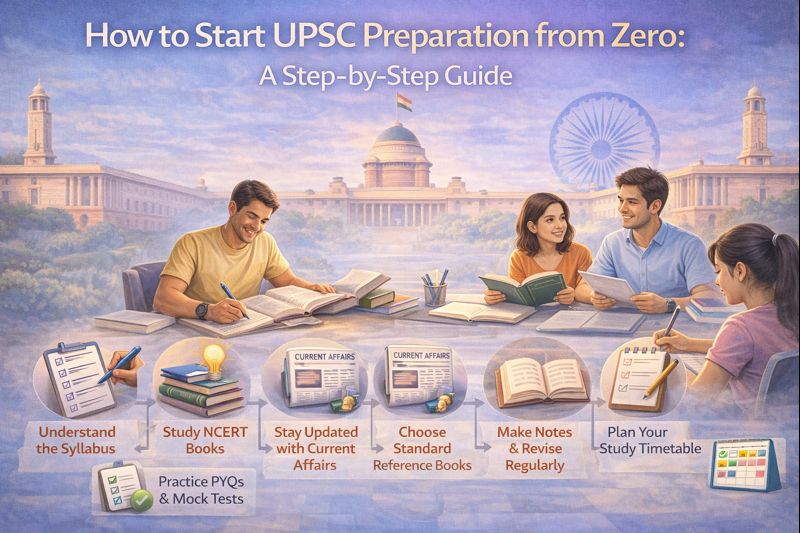
Starting UPSC preparation from zero can feel confusing and overwhelming. With a vast syllabus, tough competition, and a long preparation cycle, many aspirants struggle to understand where to begin. The good news is that with the right approach, discipline, and guidance, cracking the UPSC exam is achievable.
This guide will help you start your UPSC journey step by step, even if you are a complete beginner.
Step 1: Understand the UPSC Exam Structure
Before opening any book, it is important to understand how the UPSC Civil Services Examination works. The exam is conducted in three stages:
- Prelims – Objective type (screening stage)
- Mains – Descriptive written exam
- Interview – Personality test
Each stage tests different skills, so your preparation must be planned accordingly.
Step 2: Go Through the UPSC Syllabus Carefully
The UPSC syllabus is your most important document. Read it line by line and understand what is expected from each subject. Do not rely on guesswork or random study material.
Make a simple list of subjects such as Polity, History, Geography, Economy, Environment, and Current Affairs. This will help you plan your studies in a structured way.
Step 3: Build Strong Foundations with NCERT Books
For beginners, NCERT books are the best starting point. They explain concepts in a simple and clear manner and help build strong fundamentals.
Start with NCERTs for History, Geography, Polity, and Economy. Read slowly, understand the concepts, and avoid memorizing blindly. Strong basics will make advanced books much easier later.
Step 4: Develop the Habit of Reading the Newspaper
Current affairs play a crucial role in both Prelims and Mains. Start reading a good national newspaper daily. Focus on topics related to governance, economy, environment, international relations, and social issues.
Avoid spending too much time on unnecessary news. Make short notes and revise them regularly.
Step 5: Use Previous Year Questions (PYQs) Smartly
Previous Year Questions are a powerful tool for UPSC preparation. They help you understand the exam pattern, important topics, and the level of questions asked.
After completing each subject, solve related PYQs. This will improve your understanding and guide your future preparation.
Step 6: Make a Realistic Study Plan
Create a daily and weekly study plan that suits your routine. Do not overload yourself. Consistency is more important than long study hours.
Include time for:
- Subject study
- Revision
- Current affairs
- Answer writing practice
Stick to your plan and review it regularly.
Step 7: Practice Answer Writing Early
Many beginners delay answer writing, which is a big mistake. Start with simple answers and improve gradually. This helps in developing clarity of thought and proper presentation.
Regular practice will make Mains preparation smoother and more confident.
Step 8: Seek Proper Guidance and Mentorship
UPSC preparation is a long journey, and guidance plays a vital role. Proper mentorship helps you stay focused, avoid common mistakes, and follow the right strategy.
Joining a structured coaching program can provide direction, discipline, and regular evaluation, especially for beginners.
Final Thoughts
Starting UPSC preparation from zero requires patience, consistency, and smart planning. Focus on building strong basics, follow the syllabus strictly, and trust the process.
With the right strategy and guidance, your dream of becoming a civil servant can turn into reality.